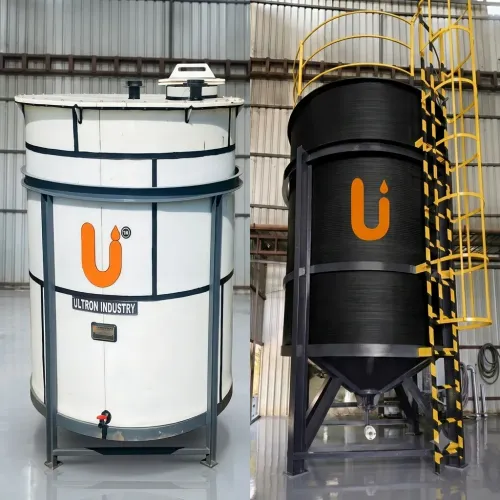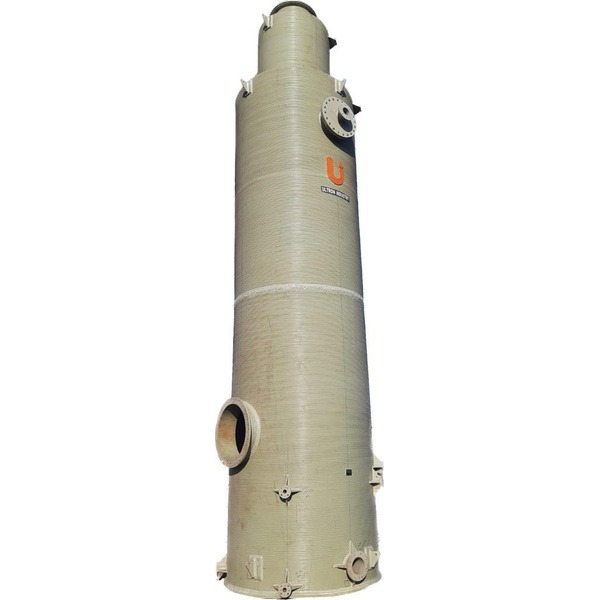
Industrial processes can generate gases, fumes, vapours, and other airborne contaminants that need to be managed before they are released into the surrounding environment. **Industrial scrubbers** are used as part of air pollution control systems to treat process gases and help industries manage unwanted contaminants.
Scrubbers are used across several industrial sectors, particularly where manufacturing and chemical processes generate gases or fumes. Selecting the right scrubber depends on the application, type of gas or contaminant, process conditions, required capacity, and overall system requirements.
What Is an Industrial Scrubber?
An industrial scrubber is an air pollution control system designed to treat a gas stream by bringing it into contact with a suitable liquid or other treatment medium.
Depending on the application, scrubbers can be designed in different configurations to meet specific process requirements. The selection of the appropriate scrubber should therefore be based on the characteristics of the gas stream and the industrial process.
## Why Are Scrubbers Important?
Industrial manufacturing processes can produce unwanted gases, fumes, and vapours. Managing these emissions is an important part of maintaining an appropriate industrial environment and designing an effective process exhaust system.
A properly selected scrubber can become an important component of an industrial emission-control system by providing a controlled method of treating process gases before they move further through the exhaust system.
The performance of a scrubber depends on factors such as the gas composition, operating conditions, flow rate, required treatment, liquid circulation, and system design.
Applications of Industrial Scrubbers
Scrubbers can be used in various industrial environments where gas treatment is required. They are particularly relevant to industries involving chemical processing and other operations that generate process fumes or gases.
Ultron Industry's brochure identifies several industries it serves, including **petrochemicals, pharmaceuticals, oil & gas, agrochemicals, pigment industries, chemicals & fertilizers, textiles & dyeing, metal & mining, and wastewater treatment**.
These industries can involve different processes and emission-control requirements, making application-specific scrubber selection important.
Key Factors When Selecting a Scrubber
1. Type of Gas or Contaminant
The first step is understanding what is present in the gas stream. Different contaminants may require different approaches to treatment.
The gas composition and characteristics should be provided to the scrubber manufacturer so that the appropriate system can be considered.
2. Gas Flow Rate
The quantity of gas that needs to be treated is another important design consideration. The scrubber system should be selected according to the process flow requirements.
3. Process Conditions
Temperature, pressure, moisture, and other process conditions can affect the selection and configuration of a scrubber.
Understanding the operating conditions allows the system to be considered according to the actual industrial process.
4. Required Treatment
The desired level and type of gas treatment should be established before selecting the scrubber. The system should be designed around the contaminants that need to be managed.
### 5. Installation Requirements
Available space, duct connections, pumps, piping, access, and other surrounding equipment should be considered when planning the scrubber installation.
Scrubbers for Chemical and Fertilizer Industries
Chemical and fertilizer manufacturing processes can involve gases and fumes that require appropriate process-gas handling systems.
For such applications, scrubber selection should be based on the characteristics of the process and the gases generated. The manufacturer should receive accurate process information before designing or selecting the appropriate scrubber system.
Ultron Industry lists **Chemicals & Fertilizers, Agro Chemicals, and Pigment Industries** among the industries it serves.
Scrubbers for Pharmaceutical and Petrochemical Applications
Pharmaceutical and petrochemical facilities can have different process conditions and gas-treatment requirements.
A scrubber system for these applications should be considered according to the specific process, gas composition, flow conditions, and installation requirements rather than using a standard configuration for every facility.
Ultron Industry's listed industries include **Pharmaceuticals and Petrochemicals**, along with Oil & Gas.
Why Choose an Application-Focused Scrubber Manufacturer?
Every industrial process has different operating conditions. For this reason, scrubber selection should begin with understanding the actual process and emission characteristics.